Coast to Coast and Around the World

Through our Internet Service Center we are able to serve customers no matter where they live. Visit our Internet Service Center or call us at 239.591.4565 or email us infos@bestselfusa.com

Sunday, October 9, 2011

Are Vaccines Safe? Do they help? Would you rather choose the natural solution to Immune Heath, or do you prefer the government flu shot?

Are Vaccines Safe?  Do they help?  Would you rather choose the natural solution to Immune Heath, or do you prefer the government flu shot?

This article was written by the editor of NaturalNews.  Yes it is a rant.  It also has some validated information and concepts that we need to be adequately  informed


Finland has now openly admitted that the swine flu vaccine "conclusively" causes narcolepsy, a chronic nervous system disorder that makes people uncontrollably fall asleep. The Finnish government, in acknowledging this link, says it will pay for "lifetime medical care" for 79 children who have been irreparably damaged by the swine flu vaccine.

Narcolepsy isn't the only side effect now admitted to be caused by swine flu vaccines: 76 of the 79 children also suffered hallucinations and "paralyzing physical collapses," say Finnish researchers.

Remarkably, even though the link between swine flu vaccines and permanent neurological damage in children is now openly admitted by the Finnish government, there is absolutely no talk about halting the utterly unscientific ritual of injecting children with flu vaccines in the first place. Not only are flu vaccines harmful to children (as is now admitted), but flu vaccines don't even work! A simple daily dose of vitamin D would do far more to halt influenza than any vaccine. 

Give Your Immune System a Natural Super-Boost - Vitamin D, Colds the Flu and You

Would you rather choose the natural solution to Immune Heath, or do you prefer the government flu shot?

U.S. refuses to admit vaccines harm anyone

The U.S. government, of course, still refuses to admit vaccines cause any harm whatsoever. Both the government and the vaccine industry continue to push the fabricated fairy tale that "vaccines are safe and effective," meaning they harm no one but help everyone. Yet the truth is practically the polar opposite: Vaccines harm countless millions of children each year in ways that are usually never linked to vaccines (mild mental retardation, suppressed immune function, learning disabilities, etc.). At the same time, vaccines are all but worthless at preventing infections. Even the vaccine industry's own research shows that flu shots only work on 1 out of 100 people, meaning they're completely useless for 99 percent of those who take them. CDC admits flu vaccines don't work (which is why you need a new one every year)


Instead of admitting the truth that vaccines cause autism, the U.S. government has conspired with vaccine manufacturers to create a Vaccine Injury Compensation Program which essentially pays "hush money" to parents of permanently harmed children to make sure they cannot bring their claims of harm to federal courts.

Even worse, the medical establishment -- which is heavily influenced if not downright dominated by pharmaceutical interests -- absolutely refuses to advocate vitamin D as a flu prevention nutrient. Vitamin D is safe, effective and affordable. It's available without a prescription and could save literally billions of dollars in national health care costs for just pennies per day per person. So why won't the medical establishment promote vitamin D? Precisely because it would cost the industry billions of dollars in lost profits from all the sickness and degenerative disease that is prevented by vitamin D.

Of course vaccines cause autism!

There is absolutely no question in the mind of any reasonably informed person that vaccines cause neurological damage, including (but not limited to) autism. Only the corporate-whore scientists around the world continue their charade that vaccines are not linked to autism; or that vaccines even work in the first place. Most Americans haven't yet heard the secret interview with Merck vaccine scientist Dr. Maurice Hilleman where he openly admits vaccines carry dozens of strains of cancer-causing "stealth" viruses.

Listen to the interview at:

Tuesday, October 4, 2011

AMA losing members in droves, less than 20 percent of US doctors support its agenda

(NaturalNews) The significance and credibility of the American Medical Association (AMA), an organization that allegedly backs physician interests and the promotion of public health, is quickly deteriorating. It is a fact that a mere 17 percent of US doctors are even members in the group anymore. Droves of current AMA members are now resigning, because of the group's open support for "Obamacare."

According to a recent Forbes report, nearly half of the doctors that have cancelled their AMA memberships in recent days say they did so primarily because of the group's support for the Obama administration's universal health care plan. And 87 percent of the AMA's remaining member physicians say they are against the health care bill as well, according to data gathered by physician recruitment firm Jackson & Coker.

Patients with private health coverage are naturally better for private practices because they allow doctors to provide higher quality and more personal care to patients. Patients with public coverage in the form of Medicare and Medicaid, on the other hand, often end up costing doctors more than the amount they receive back in reimbursements, which is why many are no longer even willing to accept public coverage patients at all.

Statistics indicate that doctors earn an average of $260 per hourly visit with privately-insured patients. On the flip side, patients covered by Medicaid only generate an average of about $20 per hourly visit, which is hardly enough to sustain a viable practice. This is why the addition of millions of new patients on government coverage via Obamacare stands to destroy the private practices of thousands, if not millions, of American doctors.

What this all means for the AMA, of course, is that the organization will continue to plunge into the depths of irrelevance, at least as far as the nation's physicians are concerned. The AMA had been losing members for many years prior to the unveiling of Obamacare -- but since the time that the bill hit the scene and received AMA support, the AMA's membership cancellation rate has only accelerated.

Meanwhile, groups like Docs4PatientCare and the Association of American Physicians and Surgeons (AAPS), both of which stand against the government takeover of health care, have seen increases in their membership bases.

Sources for this story include:

http://www.forbes.com/sites/sallypi...

Monday, October 3, 2011

The Pharmaceutical Industry's Secret

The Pharmaceutical Industry's Secret
Allen Roses, worldwide vice-president of genetics at GlaxoSmithKline (GSK), the world's 2nd largest drug manufacturer, said fewer than half of the patients prescribed drugs actually derived any benefit from them. It is an open secret within the drugs industry that most of its products are ineffective in most patients but this is the first time that such a senior pharmaceutical executive has gone public.
Dr Roses, spoke at a recent scientific meeting in London where he cited figures on how well different classes of drugs work in real patients. Drugs for Alzheimer's disease work in fewer than 30% of patients, whereas those for cancer are only effective in 25% of patients. Drugs for migraines, for osteoporosis, and arthritis work in about 50% of the patients. Lipitor, the world’s largest selling drug rarely works in women and the elderly, the two groups that are prescribed it the most. "Most drugs work in fewer than one in two patients mainly because the recipients carry genes that interfere in some way with the medicine", he said.

"The vast majority of drugs - more than 90 per cent - only work in 30 or 50 per cent of the people," Dr Roses said. "I wouldn't say that most drugs don't work. I would say that most drugs work in 30 to 50 per cent of people."

According to recent surveys, 4 out of 5 Americans – 80% of our population – take at least one medication each week. Men and women age 65 to 75 take an average of 6 medications per week and among those over age 75, the average is 11 medications per week. If you’re helping to look after elderly parents, those numbers probably don’t surprise you.

In general, the use of prescription drugs increases 9-10% a year. That means that within 3 years, the average American will take at least one medication each week.

I don’t believe that any of us is born with a drug deficiency, nor do we acquire one later on in life. We all have an innate Life Force that is capable of doing amazing things when given the right conditions, nutrients, and opportunity to do so. With the right approach, most people can eliminate high blood pressure, high cholesterol, diabetes, excess weight, migraines, arthritis, and fatigue, just to name a few.

When you give up personal responsibility for your health, you pay a high price. Don’t worry, Big Pharma will be glad you’re paying it.
# # # # # # #

Prozac vs. Placebos
America’s favorite antidepressants are little better than sugar pills. Have the drugs been overhyped? It’s not that simple

By David Noonan and Geoffrey CowleyNEWSWEEK

Over the past 14 years, millions of Americans have escaped the debilitating and sometimes lethal grip of depression with the help of a handful of popular drugs, including Prozac, Zoloft and Paxil. This new generation of antidepressants, decidedly safer and easier to use than the medications they replaced, offered welcome relief to a wide variety of patients and racked up billions in sales.

AS THE PILLS changed lives and even saved them, they became part of the cultural landscape, inspiring countless articles, books and talk-show segments. Today more than 7 million Americans take these drugs for depression, and the number is still climbing. All of which leaves Irving Kirsch unimpressed. Indeed, according to Kirsch, the author of a forthcoming study of antidepressants titled “The Emperor’s New Drugs,” America’s favorite pills “may have no meaningful pharmacological effect at all.”

Anti-drug zealots have said that for years, but Kirsch is a scientist, and he has data to back his assertion. Prozac and its cousins—the so-called SSRIs—are all thought to work by boosting the effects of the neurotransmitter serotonin (and in some cases norepinephrine). Is it possible that all this chemical manipulation is unnecessary—that people feel better on these drugs simply because they think they will? In hopes of finding out, Kirsch, a psychologist at the University of Connecticut, pooled data from 38 studies on six drugs approved by the Food and Drug Administration between 1987 and 1999 (the three above, and Serzone, Celexa and Effexor). The studies were placebo-controlled clinical trials in which some depressed patients were given actual drugs while others got pills with no active ingredients. The studies didn’t show any lack of effect. In fact, the patients improved markedly. The problem is that people who got placebos fared almost as well as those getting real drugs. On average, people on placebos enjoyed an eight-point improvement on the 50-point Hamilton Depression Scale, while those on medication managed a 10-point improvement. It’s no secret that placebos can ease depression in short-term studies, but Kirsch and his colleagues raise an unsettling possibility. In a paper appearing next week in Prevention & Treatment, an online journal published by the American Psychological Association (apa.org), they argue that the SSRIs’ active ingredients may account only for the two-point difference between drug and placebo, not the whole 10-point benefit that users enjoy. If so, says Kirsch, the benefits are “clinically negligible.”
     
TESTS AND EXPECTATIONS
       There are a couple of problems, though. First, drug effects and placebo effects may not be “additive.” In other words, even if it’s possible to reproduce 80 percent of a drug’s effect with a placebo, that doesn’t mean the people taking the drug derive 80 percent of their benefit from the placebo response. If people received the drug without their knowledge, would they get only 20 percent of the effect? The question is worth asking, but it’s difficult to answer, because researchers can’t study drugs by slipping them into people’s coffee. Drug trials require informed consent—and once participants know what’s going on in a study, expectations rise. But suppose 80 percent of the antidepressant effect is just placebo. Is there a practical way to tap that benefit in the absence of an actual drug? If clinicians stopped prescribing antidepressants, patients wouldn’t lose only the two-point advantage that treatment offers over placebo, they would lose the whole 10-point improvement. And no one is suggesting that drugmakers start bottling sugar pills.

The new study might well prompt some depressed people to skip the drugs altogether. If the benefits are negligible, why endure side effects that can include nausea, nervousness, sweating, tremors and decreased libido? But while Kirsch thinks psychotherapy—the good old talking cure—is an effective alternative, he does not advise anyone to stop using antidepressants. Neither does Dr. Rodrigo Munoz, past president of the American Psychiatric Association. Like many clinicians, he believes the drugs have a much greater effect than Kirsch’s analysis suggests. “Even if 20 percent is the best we have,” he says, “I’ll live with it until we have something better.” Munoz notes that 15 percent of people with depression end up killing themselves. “When I see a patient who is suicidal, I use all the artillery. I am not going to say, ‘Well, 20 percent is not enough for me’.”

A large part of the problem in assessing the effectiveness of the antidepressants is the maddening complexity of depression itself, with its wide range of symptoms and many levels of disability. Dr. Walter Brown of Brown University Medical School says the antidepressants “are probably not as effective as the hype around them would suggest.” But Brown, who wrote a commentary on Kirsch’s study that will also be published in Prevention & Treatment, believes the drugs are more powerful than Kirsch concludes. He says the mild and moderately afflicted patients who typically participate in clinical trials can exaggerate the placebo response. In Brown’s experience, severely depressed patients do not respond nearly as well when treated with placebos. He believes the drugs are more effective in the real world, where they are used to treat a range of sick people over long periods.

Some who question the efficacy of antidepressants say the massive promotional efforts by the drugmakers may actually boost the placebo response. “One day we may look back and marvel at the stroke of marketing genius that led to calling these medications antidepressants in the first place,” says clinical psychologist David Antonuccio of the University of Nevada School of Medicine. But Dr. Michael Miller of Harvard Medical School says that in his clinical experience, the placebo response is limited. Most of his patients enjoy a brief improvement no matter what treatment they receive. Those getting only a placebo response soon return to their misery, he says. But those responding to medication enjoy longer-term benefits.

        Even Kirsch admits that the real problem may be figuring out the best way to measure the power of the drugs. For the millions who owe their peace of mind to the antidepressants they take, the point may be irrelevant. In the end, anything that lightens the days of those who suffer depression is a good thing.
        # # # # # # # #
Best Self USA offers an alternative for the biological solution to mood disorders.  They have a medical doctor on staff and a psychiatrist on adjunt staff when prescription medication is prefered or indicated.  However, Best Self USA  Best Self USA is well known for finding nutritional solutions to emotional problems. They use the highest quality nutrients from the largest natural nutrition company in the world. General nutritional counseling is offered without fees.Neurotransmitters (NTs) are essential chemical messengers that regulate brain, muscle, nerve and organ function. The most common neurotransmitters are serotonin, dopamine, norepinephrine, and epinephrine. Low levels of these important chemicals are extremely common in the general public, due to innumerable lifestyle, environmental, and dietary factors. This article is intended to help the reader determine whether they may be deficient in neurotransmitters and how evaluation and treatment of this disorder can help.

# # # # # #

Dopamine, Acetylcholine, GABA and Serotonin are probably the most important brain neurotransmitters, with dopamine being the "precursor" for norepinephrine and epinephrine
People with neurotransmitter deficiency disorder can suffer from one or more of the following conditions: obesity, depression, anxiety, fibromyalgia, chronic fatigue, insomnia, attention deficit, learning disorders, panic attacks, migraines, pms, menopausal symptoms, digestive complaints and many more.
Selective serotonin re-uptake inhibitors (SSRIs) such as Prozac, Zoloft, Effexor, Celexa, etc. are currently some of the most commonly prescribed drugs. They work by artificially increasing the amount of serotonin in the synapse of the nerve which allows a temporary improvement in the chemical messaging system.
The problem with this approach is that these drugs DO NOT increase serotonin levels; in fact they deplete reserves of the NT. This occurs because the SSRI class drugs cause an increase in an enzyme called MAO. It is common for people to experience only temporary improvement due to this effect.
The natural treatment for optimizing the neurotransmitter levels is to provide the basic amino acid precursors, or building blocks, so the body can replenish the inadequate neurotransmitter levels.


Tuesday, September 27, 2011

IMPORTANT ADD INFORMATION - Diagnostic Traits and Misconceptions

Be sure to click the links in this article!
 
Six or more of the following symptoms of inattention have been present for at least 6 months to a point that is disruptive and inappropriate for developmental level:here
Inattention
  1. Often does not give close attention to details or makes careless mistakes in schoolwork, work, or other activities.
  2. Often has trouble keeping attention on tasks or play activities.
  3. Often does not seem to listen when spoken to directly.
  4. Often does not follow instructions and fails to finish schoolwork, chores, or duties in the workplace (not due to oppositional behavior or failure to understand instructions).
  5. Often has trouble organizing activities.
  6. Often avoids, dislikes, or doesn't want to do things that take a lot of mental effort for a long period of time (such as schoolwork or homework).
  7. Often loses things needed for tasks and activities (e.g. toys, school assignments, pencils, books, or tools).
  8. Is often easily distracted.
  9. Is often forgetful in daily activities.
  1. Six or more of the following symptoms of hyperactivity-impulsivity have been present for at least 6 months to an extent that is disruptive and inappropriate for developmental level:
Hyperactivity
  1. Often fidgets with hands or feet or squirms in seat.
  2. Often gets up from seat when remaining in seat is expected.
  3. Often runs about or climbs when and where it is not appropriate (adolescents or adults may feel very restless).
  4. Often has trouble playing or enjoying leisure activities quietly.
  5. Is often "on the go" or often acts as if "driven by a motor".
  6. Often talks excessively.
Impulsivity
  1. Often blurts out answers before questions have been finished.
  2. Often has trouble waiting one's turn.
  3. Often interrupts or intrudes on others (e.g., butts into conversations or games).
  1. Some symptoms that cause impairment were present before age 7 years.
  2. Some impairment from the symptoms is present in two or more settings (e.g. at school/work and at home).
  3. There must be clear evidence of significant impairment in social, school, or work functioning.
  4. The symptoms do not happen only during the course of a Pervasive Developmental Disorder, Schizophrenia, or other Psychotic Disorder. The symptoms are not better accounted for by another mental disorder (e.g. Mood Disorder, Anxiety Disorder, Dissociative Disorder, or a Personality Disorder).
Based on these criteria, three types of ADHD are identified:
  1. ADHD, Combined Type: if both criteria 1A and 1B are met for the past 6 months
  2. ADHD, Predominantly Inattentive Type: if criterion 1A is met but criterion 1B is not met for the past six months 
  3. ADHD, Predominantly Hyperactive-Impulsive Type: if Criterion 1B is met but Criterion 1A is not met for the past six months.
American Psychiatric Association: Diagnostic and Statistical Manual of Mental Disorders, Fourth Edition, Text Revision. Washington, DC, American Psychiatric Association, 2000.
For a version of the DSM IV criteria and quotes on related MBTI temperament traits, click

For more complete information on ADD/ADHD , misconceptions, diagnosis and treatment, go to:

http://www.borntoexplore.org/whatisadd.htm

For additional information and a  checklist for children see  Children: Diagnosis, "Treatment" and Alternatives.

Monday, September 26, 2011

ADHD Is Not a Disease

ADHD Is Not a Disease

ADHD“Hey, Phillip… do you mind if I sit here and eat with you?” I asked.
“Sure, whatever…”
“How’s school going? Are you doing well?”
“Not really. I just want it to be summer.”
“Yeah, I remember how that used to feel,” I told him.

Phillip is eleven years old. He’s the son of some family friends and I was at a small party when I saw him sitting by himself. I hadn’t seen him for a few years, so I wanted to remind him who I was and get to know him a little better.

As he became comfortable, he opened up a bit more. He told me his plans for the summer. He told me about his friends and the girl he likes at school. And he also told me that he didn’t care for school all that much.
“It’s hard,” he said. “Plus, I have ADHD, so I don’t pay attention very well.”

“Really? How do you know you have ADHD?” I asked.

“That’s what my doctor said. He said I’ve had it since I was born. That’s why I have to take medicine.”
“Well, I think you’re just fine. How does that medicine make you feel?”

“It used to make me kinda nervous,” he said. “And I couldn’t go to sleep when I took it. Now, it just makes me not want to eat.”

After complimenting Phillip on his manners and intelligence, I changed the subject back to his plans for the summer. But what he said bothered me. Here was a bright young boy who was bored and frustrated in school… who probably had a few behavioral problems… and who had now been labeled as having a “disease” and put on medication.

And, unfortunately, Phillip is just one of millions…

I was bothered by his story because I could only imagine what that would do to the psyche and development of a child to be handed a lifelong sentence like that from a doctor. You are broken. You are defective. Your brain doesn’t work right. You are not acceptable in your natural state, but taking these drugs every day can help you.

It might be one thing if ADHD was actually a “disease”… but it’s not.

In 1987, attention-deficit/hyperactivity disorder (ADHD) was voted into existence by the American Psychiatric Association and inserted in the Diagnostic and Statistical Manual of Mental Disorders (DSM). Yes, that’s right… the “disease” was “voted” into existence.

Can you imagine if we had to take a “vote” to determine whether cancer is a disease… or diabetes… or heart disease? That would be patently ludicrous. But every year, more and more disorders are voted into the DSM.

In the case of ADHD, psychiatrists made a list of the most common behaviors among children that parents and teachers object to — and then termed them a disease. Within one year, more than half a million children were “diagnosed.”

Since then, the number of behaviors that constitute the disorder has continued to grow. There are now 18 of them. That opens the door for even more children to be labeled and then put on drugs.

Today, most ADHD “testing” consists of parents, teachers, school administrators, or social workers checking off these behaviors as observed at home and in the classroom. A doctor reviews the checklist, and if six or more of these behaviors are exhibited, then the child is “diagnosed” with ADHD. In almost every case, the treatment is pharmaceutical.

Today, the “epidemic” of ADHD has grown to about seven million young people in the U.S. Most of these children are on medication. And if you add in the numbers that are on antidepressants and other psychotropic medications, the number is over 10 million. That is larger than the entire population of New York City!
You might ask, where were these kids when I was growing up?

Dr. Russell Barkley, Professor of Psychiatry at the University of Massachusetts, has the answer for that. They were there, he says. “They were the class clowns. […] Back then, we didn’t have a professional label for them.

“They were the lazy kids, the no-good kids, the dropouts, the delinquents, the lay-about ne’er-do-wells who were doing nothing with their lives. Now we know better. Now we know that it is a real disability, that it is a valid condition…”

They were the dropouts, huh? The kids who didn’t fit in? The kids who found traditional schooling to be hostile, boring, and unacceptable? I wonder if Barkley was referring to “dropouts” like:
  • Bill Gates & Paul Allen (college dropouts, cofounders of Microsoft)
  • Sir Richard Branson (high school dropout, founder of the Virgin Group)
  • Michael Dell, Larry Ellison, and Steve Jobs (college dropouts, computer company founders)
  • Kirk Kerkorian (eighth-grade dropout, billionaire)
  • William Faulkner (high school and college dropout, Nobel Prize-winning novelist)
  • Ray Kroc (high school dropout, founder of McDonald’s)
  • Dave Thomas (high school dropout, founder of Wendy’s)
Almost certainly, if many of these men were in school today, they would be “labeled” with a mental disorder.
The pharmaceutical companies and modern psychiatry represent ADHD to be a biological abnormality of the brain. Along with many other “mental illnesses,” it is often said to be caused by that catch-all phrase — “a chemical imbalance.”

The problem is that psychiatry has never validated ADHD as a biological entity. They have never shown even the slightest bit of proof of a “chemical imbalance” or that this is an actual brain disease. And yet, millions of children and parents are told fraudulently that this is the case.

Dr. Fred Baughman is a respected pediatric neurologist who has been in practice for 35 years. He knows what a real disease is.  So, from 1993 to 1997, he doggedly pursued correspondence with the Food and Drug Administration (FDA), the Drug Enforcement Agency (DEA), Ciba-Geigy (the original manufacturers of Ritalin), and top ADHD researchers at the National Institute of Mental Health. He asked them to show him ANY peer-reviewed scientific literature proving a physical or chemical aberration that would qualify ADHD as a disease or a medical syndrome.

After years of persistence, Dr. Baughman finally got these groups to admit that there is NO objective validation for ADHD. Today, the National Institutes of Health state that, “We do not have an independent, valid test for ADHD, and there is no data to indicate that ADHD is due to a brain malfunction.”

And yet, hundreds of thousands of doctors still “label” children as diseased and prescribe powerful and dangerous drugs for something that they have admitted they can’t prove. That is not medicine. It is fraud.
And many doctors and social workers push these drugs forcefully and manipulatively. I heard of one doctor who asked a parent, “If your child had diabetes, you would give him insulin, wouldn’t you?”

Unfortunately, that parent probably didn’t know enough to tell the doctor that diabetes can be measured — either by blood sugar abnormalities or pancreatic malfunction — while ADHD cannot.

When you go to a doctor, they take blood, they do X-rays. They don’t ask how you behave. And yet, that is how the “disease” of ADHD (along with depression and many other “mental illnesses”) is diagnosed.
Thomas Szasz, Professor Emeritus of Psychiatry at the State University of New York, says, “No behavior or misbehavior can be a disease. That is not what diseases are.”

Diseases are malfunctions of the human body. For example, typhoid fever is a disease. Spring fever? Not so much. Spring fever is a metaphor. It is a figure of speech… just like most mental illnesses. And yet, the treatment for this figure of speech is now worth billions of dollars a year.

Though there are now many drugs used to treat ADHD, Ritalin (methylphenidate) is one of the most common. In 1970, there were an estimated 150,000 U.S. children taking Ritalin. Today, the number is estimated to be higher than five million. According to the Drug Enforcement Agency, the production of methylphenidate increased 700% between 1990 and 1997!

And the trend is to “diagnose” children at younger and younger ages. According a study published in the Journal of the American Medical Association, prescriptions for two- to four-year-olds increased by almost 300% between 1991 and 1995. I didn’t search for more recent statistics, but you can be sure the trend has continued.

And despite what those who promote them might say… these are NOT safe and harmless medications.
Ritalin, for example, is classified by the FDA and the DEA as a Schedule II Controlled Substance. It is listed in the same category as methamphetamines, cocaine, morphine, and Dilaudid (among other powerful illegal and prescription drugs). These drugs are powerful. They can cause harm. And they carry a significant risk of abuse.

Most ADHD drugs are a class of amphetamine. On the street, these stimulants are commonly known as “speed.” And while “speed” can increase alertness and productivity, the trajectory is crash and burn.
But what are the risks of long-term use of these drugs, especially by developing children?

These drugs have been known to cause depression and psychotic states. And they can be the cause of real neurological disorders like epilepsy and seizures. They can also lead to physical dependence and have been shown to precipitate illegal drug abuse.

Studies have also shown that ADHD drugs stunt the physical growth of children and cause the brain to atrophy and shrink.

But of course, the biggest risk is death. In fact, research funded by the National Institute of Mental Health showed that children and teens on drugs such as Ritalin have a 500% higher risk of sudden death than would be typical for children of a similar age and health status.

Not surprisingly, long-term use can increase the risk of heart attack.

And cancer is a known risk, too. In one study, researchers identified twelve children who met the criteria for ADHD in the DSM-IV and were to begin taking methylphenidate in daily doses between 20 and 54 mg. Because the test group was small, each child was used as his or her own control.

Chromosomal abnormalities in blood cells were measured before starting the treatment. Then these same tests were performed after three months of taking the medication. Three separate chromosomal abnormalities were evaluated. In every single child, significant increases in chromosomal aberrations were measured. On average, the aberrations increased by 323% following treatment. Researchers believe that greater frequencies of these aberrations equate to an increased risk of cancer.

And to balance out these significant risks… there are absolutely NO long-term studies that show positive effects from these drugs on learning, academic standards, or social behavior.

Certainly there are children who are misbehaving at school and at home. There are kids who are unable to achieve self-control. There are those who are unusually hyperactive.

But in the vast majority of cases, these kids do not need medication. They certainly do not need to be exposed to the dangers of these drugs. But do their doctors ever ask what kind of foods, preservatives, and additives these children are exposed to? Do they inquire about nutrition or give advice about the many ways that the foods children eat, the toxins they are exposed to, and the nutrients they are missing can affect mood and behavior? Of course, most doctors do not. That would require too much effort and follow-up. It is much easier (and more profitable) to write a quick prescription and usher in a new patient.

Today, we are constantly told to protect our children from drug abuse. And yet, there are some disturbing exceptions to that rule. Thomas Szasz put it well when he said, “Labeling a child as mentally ill is stigmatization, not diagnosis. Giving a child a psychiatric drug is poisoning, not treatment.”

To Your Health,
Jon Herring

Saturday, September 17, 2011

Why Supplement? Common Mistakes - Best Choices

My name is Sam.  I used and abused my body for decades.  Then I had a heart attack.  The official diagnosis was that I needed a heart transplant.  In two years time I went from needing a heart transplant to being heart healthy without drugs or surgery.  Part of my regimen was nutritional supplementation.  Now I am on a mission to educate as may people as I can about the need for nutritional supplementation.  Why?  Because I found out that most disease can be prevented or reversed by changes in life style and putting high quality nutrition into our bodies.

 “Why Supplement?”
Below is the science that supports my mission.
Here is a new digital version of “Why Supplement” based on a Time magazine article on health.

View the full digital version here:
http://www.nxtbook.com/nxtbooks/shaklee/whysupplement/index.php

Please feel free to forward it to your contacts


Here is a short summary of the “Why Supplement?” brochure.
Since growing crops was taken over by agri-business, rather than family farms, crops are grown for their monetary value not their nutritional value.  The chart below is a small sample of the problem.  In general, foods that are mass marketed can not provide adequate nutrition to maintain your health.
Decline in nutrient value of crops from 1950 to 1999
    Protein  calcium   iron  Vit “A”     Vit “B” Vit “C”

This lack of adequate nutrition has led to startling increases in the incidence of disease over the last decade.  Longer studies show an even more dramatic increase in incidents of disease in many categories.
Supplementation
Proper nutrition and a healthy lifestyle can prevent many major diseases 60-90% of the time.

The good news is that the very latest research verifies that you can positively influence your health every day through the lifestyle changes you make and through the quality of your nutritional intake.
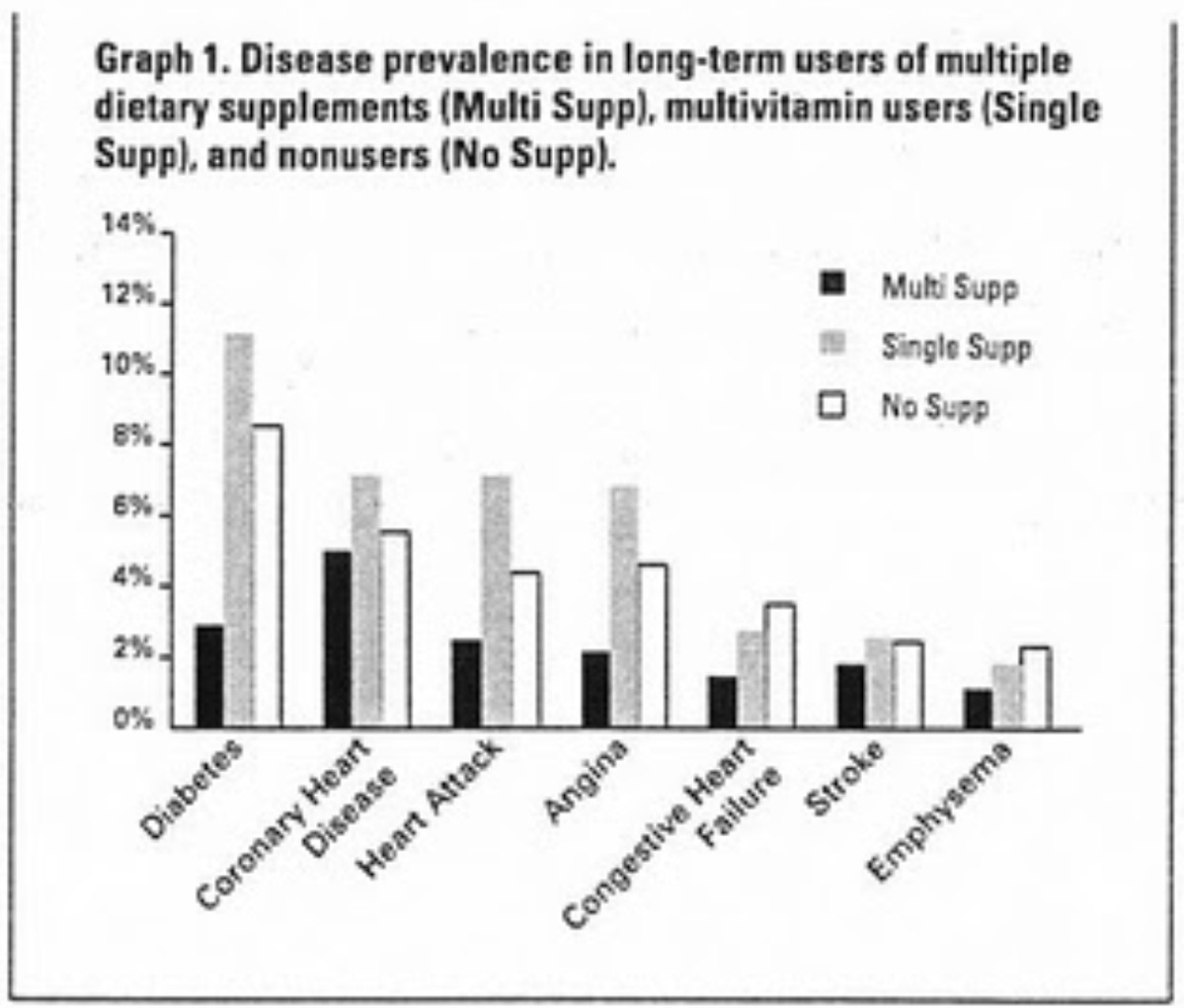
A recent groundbreaking Landmark Study correlates long-term supplement use with better overall health.  People using a wide range of high-quality nutritional supplements for 20 years or more showed dramatic benefits compared to those who took just a one a day mass marketed multivitamin or no supplement at all.  These long-term supplement users were nearly four times more likely to describe their health as “very good” or excellent compared to other study participants.
Countless Studies Can’t Be Wrong!
Many of the world’s leading experts in medicine, biochemistry, and nutrition believe nutritional supplementation positively affects overall health.  Doctors from Harvard, Stanford, and Yale, and researchers from the American Heart Association, the American Medical Association, and the American Cancer Society can’t all be wrong!  If you know people who say “vitamins don’t do any good”, they are just plain wrong.

If you want to prevent illness or reverse health conditions be sure to get the most important nutrients your brain and body needs to function optimally.  The short list for these necessary nutrients is:
A multivitamin – Vitamin “D” – Calcium – “B” Vitamins – Vitamin “C” – Omega-3 fatty acids -  Antioxidants – and Probiotics

90% of Americans fall short in getting essential nutrients in our diets!
Warning: There is much misinformation and lack of knowledge about vitamin supplementation. Below is a helpful summary of research work being done by Dr. Michael Pazdon, at the University of New Hampshire. His report is as follows:
“Of the vitamin supplements being marketed in the United States today, we found that there are basically three types (1) Synthetic (chemical), (2) Crystallized (heat processed) and (3) Lyophilized (low temperature dehydration). These three types were tested by chromatograms prepared by the method of Pfeiffer (BioDynamics 50, 2t), with slight modification.
  • SYNTHETIC: These one a day type of multivitamins are a chemical vitamin isolate made from inorganic materials, i.e., petroleum by-products. Sold mainly in drugstores, these vitamins act as drugs in the body. They may set up toxic reactions, and thereby rob the body of its own storehouse of antibodies.  
  • CRYSTALLIZED: Commonly labeled “organic” or “natural,” these vitamins are isolates derived at least partly from a whole food (organic) source but processed by a less expensive, high temperature process. Products need be only 10% organic to legally carry the label “natural ingredients.” Most of the live enzymes necessary for absorption into the body have been destroyed in this type of vitamin. (Example: If we labeled a dead horse “natural and organic,” our label would be correct. If we wanted to ride him to town, however, we would be out of luck. “Organic and Natural” do not necessarily mean vital or “alive.”) Sold in some drug stores and most health food stores.
  • LYPOHILIZED: Whole food is dehydrated by a cold process, preserving the complex of vitamins, bioflavonoids and enzymes found in nature. Enzymes necessary for absorption into the body remain intact. The only company we could find marketing this type of supplement is Shaklee Corporation. Shaklee products are sold by independent distributors and are not available in retail stores.”
Shocking Revelation - Here is a summary chart of the comprehensive 20 year Landmark Study dome by the University of California at Berkley.  Note that people who used the one a day type of synthetic nutrients were more at risk for disease than those who did nothing at all.  The category with the lowest risk of disease used organically sourced, cold processed, natural nutrients.


The average person over age 65 has taken 19.1 prescriptions.

The average person 50 to 65 has taken 7.6 prescriptions.


The Shaklee user for 20+ years has taken 0.6 prescriptions. (avg. age 62)

To see the full Landmark Study click the link below

HOW ARE SHAKLEE SUPPLEMENTS DIFFERENT?
Technical Services Dept. Information Sheet
1. Shaklee’s Health Sciences researchers establish that there is a real need for a particular combination of nutrients. They do NOT simply react to faddy trends in the nutrition world.
2. Shaklee’s Product Development staff develop a stable, balanced formula reflecting the requirements identified by the health scientists. (They do NOT just make formulas with more of ingredient "X" than the competition.)
3. Raw ingredients are selected for each product using these criteria:
• They are from natural sources wherever possible (natural materials often contain other related beneficial compounds along with a particular nutrient).
• They must meet rigorous Shaklee quality standards for purity, potency and identity before being used in a batch of the product
4. No artificial sweeteners, flavors or colors are added.
5. No preservatives are added.
6. Packaging materials are carefully selected and tested to give proper protection of the product throughout its shelf life. The shelf life is determined using scientific stability studies.
7. Products are made to pharmaceutical standards using Good Manufacturing Practices and employ controlled temperatures, pressures, humidity, etc., so that no loss of the product's nutrients or damage to naturally occurring enzymes will take place during manufacturing and packaging.
8. Every batch of product is subjected to Quality Control tests to ensure full compliance with Shaklee's finished product specifications.
9. Many products, in the research and development stage, are subjected to clinical studies with human volunteers to demonstrate that the dosage forms are effective in delivering the nutrients to the body. Many of these studies have been published in peer-reviewed scientific journals.
10. Full technical information about Shaklee products is made available to customers on request, e.g., ingredient listings, nutritional profiles, etc.

Changing brands Can Change Your Life and Save You Money
This is interesting: a line-by-line label cost comparison of Walgreens and GNC supplements compared to Shaklee Vitalizer, done on 1/14/11.  Both Walgreen’s and GNC supplements do not meet the quality standards of Shaklee so most people would expect to pay more for Shaklee
Note that GNC's multi contains no bioflavin, quercetin, nickel, tin, vanadium, or boron.  

Otherwise, to get the same amount of vitamins and minerals as Vitalizer, you would have to buy:
Walgreens- 30-day supply
Centrum Performance multivitamin/multimineral: $11.99 X 4
MegaRed omega fish oil: $29.99 X 2
Naturemade probiotic: $11.49 X 1
Total: $119.43

GNC- 30 day supply
Women's Ultramega: $39.99 X 1
Triple strength fish oil: $38.99 x 1
Ultra probiotic: $39.99 X 1
Total: $118.97


Shaklee
Vitalizer 1 box/30-day supply
Total:  $85 Member price ($76.50 on AutoShip)
Give Vitalizer a try!   Vitalizer Video:
A FREE Shaklee Membership with your first Vitalizer order.  Now you can use the highest quality nutrients, prevent and reverse disease, and if you refer new people to the Vitalizer program your Vitalizer can be free.   If you have an interest in a career as a Shaklee distributor we can show you how to do that too.
Unequaled quality (nobody comes close,) 90 years of research, 1000 tests on every batch, 90 peer-reviewed scientific articles, plus  better price and guaranteed results!
The Shaklee Difference, Video:  http://www.youtube.com/watch?v=eG-3StLcArg

Those who take prescription medications need to be aware of the additional risk of drug induced nutritional deficiencies.  

MEDICATION ROBS YOUR BODY OF NECESSARY NUTRIENTS :


Changing Brands Can Change Your Life (and your wallet!)

Live better with Shaklee ... helping people live since 1915!

For more info, contact: http://www.bestself.myshaklee.com/   

Ask us to explain the Shaklee Member Referral Program
If you prefer personalized service call us:  239-591-4565 
We do free nutritional counseling.

Saturday, September 10, 2011

Nationwide Counseling Available in the Privacy of Your Own Home

Nationwide Counseling Available
in the Privacy of Your Own Home
Best Self USA is a full spectrum counseling and life skills training facility offering NATIONWIDE distance counseling services in the privacy of your own home by use of voice, video, online and other media.
NEWS RELEASE
For Immediate Release
Phone: 239-591-4565
Media Interview: 1-800-850-1987
(Naples, FL) Best Self USA is an innovative Counseling and Life Skills Clinic.  They have been helping people for more than 40 years, and are applying the latest research and technology.

Responding to the needs of their clients is what motivates Best Self USA to develop new services and techniques.  Best Self USA is unique in offering long distance services as well as helping their local clients in Naples, Florida.  The long distance counseling services grew out of the need to remain in contact with clients who live in Naples seasonally and elsewhere off-season. 

Recently Best Self USA has launched a new web site http://www.bestselfusa.com/, added new staff members, and expanded their services to include full spectrum counseling and life skills training to a nationwide clientele. They are now serving clients across the country.

Other groundbreaking services provided by Best Self USA include:


The staff at the Best Self Clinic can help you to become the best you can be!