Coast to Coast and Around the World

Through our Internet Service Center we are able to serve customers no matter where they live. Visit our Internet Service Center or call us at 239.591.4565 or email us infos@bestselfusa.com

Tuesday, September 7, 2010

Simplifying the complexities of vitamin "D" dosages

Hi Sam,


There is a lot of confusion today about how much

vitamin D we should be getting in our diet.


The official DRIs (the new term for RDAs) established

by the Food & Nutrition Board of the National Academies

of Science is around 400 IU for most adults. And the UL

(upper limit for safe use) for almost everyone has been

set at 2,000 IU for years.


Almost all experts agree that those levels are too low.


Some doctors (including some that are popular on TV or

the internet) have advised that everyone should be

taking 5,000 to 10,000 IU of vitamin D/day.


However, that's probably too much. Many experts warn

that some people are likely to develop vitamin D

toxicity at that level of intake.


Yet, we are hearing that anywhere from 40% to 60% of

Americans are deficient in vitamin D.


No one wants to be deficient in vitamin D, but most

people are confused. They just don't know how much

vitamin D they should be getting in their diet.


This is where Shaklee research has really led the way.


Shaklee has done three clinical studies to determine

what vitamin D intake should be and how to get the

vitamin D that you need.


In the Landmark study (Nutrition Journal, 6:30, 2007)

they demonstrated that people consuming a variety of

Shaklee supplements for 20 years or more generally had

optimal levels of vitamin D in their blood.


They followed that with a study (submitted for

publication) comparing Shaklee supplement users and

non-Shaklee supplement users and showed that 1,000 IU

of vitamin D from Shaklee supplements was associated

with optimal blood levels of vitamin D for most people.


And they have just completed a study with non-Shaklee

users showing that supplementation with 1,000 IU of

vitamin D from Shaklee supplements was sufficient to

bring their blood levels of vitamin D from inadequate

to adequate.


So you might be tempted to think that all you need to

do is get 1,000 IU of vitamin D from Shaklee

supplements and you will be fine.


It's not quite that simple.


You will notice I said that 1,000 IU of vitamin D from

Shaklee supplements resulted in an optimal blood level

of vitamin D for MOST people.


But that doesn't mean that everyone in the study had

optimal blood levels. There were some people who took

1,000 IU of vitamin D, but still had low blood levels.


That's because there is tremendous individual variation

in our need for vitamin D.


Our dietary vitamin D requirements are influenced by a

number of factors such as the time of year, our age,

our skin color, our weight, our exposure to sunlight

and where we live.


Because of that Shaklee has lead the way again with a

simple on-line quiz http://bestself.myshaklee.com/us/en/pop_VitaminD_Quiz.s.html

that anyone can take to determine

their personal vitamin D requirements and a vitamin D3

supplement to help people customize their intake to

match those requirements.


Finally, someone has taken the confusion out of vitamin

D supplementation!


However, I do have one final note of caution. There are

some genetic differences that also influence vitamin D

requirements, so I do recommend that you have your

blood levels of vitamin D3 determined at your next

doctor's visit.


To Your Health!

Dr. Stephen G Chaney

Saturday, September 4, 2010

Natural health advocates speak out about best medicine


Natural health advocates speak out about best medicine
By Dayna Harpster • dharpster@news-press.com • August 24, 2010


It’s not a term that flows trippingly off the tongue: orthomolecular pharmacology. But its meaning has had tongues wagging for years. It has fed an entrenched disagreement about the best way to prevent illness and treat disease.


On one side of the table is the traditional medical establishment, where the muscle and money is behind prescription drugs.


On the other are the herbalists and natural health practitioners, where less money and muscle are behind vitamin supplements and organic foods.


The latter’s position is clear in the documentary “Food Matters,” shown recently by Sam and Bunny Sewell, directors of Best Self USA, a holistic health company in North Naples.


For more on Sam Sewell’s story, go to http://ifiredmydoctors.blogspot.com/


Its premise is a statement by Hippocrates, considered the founding father of modern medicine: “Let thy food be thy medicine and thy medicine be thy food.”


The film contends that reliable studies show large doses of vitamin C have cured cancer, that megadoses of niacin have cured depression — in Alcoholics Anonymous founder Bill Wilson, among others — and that two handfuls of cashews are as mood-elevating as a standard dose of Prozac.


But the problem starts well before a person shows symptoms of illness. Charlotte Gerson, the daughter of Max Gerson, the German doctor who claimed an ability to cure cancer through diet, founded an institute in his name. It advocates a diet grown in nutrient-rich soil, which Gerson said is nearly nonexistent at most farms.


“Soil requires 52 minerals to grow (nutritious food),” Gerson says in the film. But many of those substances are missing. “So farmers turn to chemical compounds for solutions, like pesticides and growth stimulants.” Then we cook the food, which kills the beneficial enzymes.


The result is chronic malnutrition. And malnutrition leaves us susceptible to disease. Film experts wonder aloud why serious diseases are treated with surgery, radiation and chemotherapy, but not nutrition.


The problem is that doctors’ main source of information about drugs comes from the highly profitable pharmaceutical companies, said Fort Myers herbalist and natural health practitioner Jim Occhiogrosso. They’re the first to point out that the Food & Drug Administration does not regulate vitamin supplements, so the amounts of substances in the supplements can vary widely.


That’s true, said Occhiogrosso, and taking supplements from an unknown or unresearched source can be dangerous. But reputable health practitioners and supplement manufacturers do exist.


He uses sites such as consumerlab.com and supplementwatch.com to stay on top of any negative reports. He passes those along on his Web site, www.healthnaturallytoday.com


Sam Sewell publicizes similar findings in his blog, thenaturaladvocate.blogspot.com .

Both have noticed a growing interest in non-pharmaceutical approaches to health and healing in the past few years.


“But the generation that grew up with the M.D. as a god, oh my gosh are their minds closed,” Sewell said


Middle-age and younger people are beginning to realize the value of supplements, said Occhiogrosso. They’re generally cheaper and have fewer side effects, he said.

“People will watch TV and see an ad for a new drug that says ‘Run to your doctor and ask about it.’ And then the next says, ‘If you were harmed by it, call 1-800-BAD-DRUG.”


NOT TO SUPPLEMENT


Consumer Reports’ September issue contains a cautionary article about dietary supplements, which Americans reportedly paid $26.7 billion for in 2009. The magazine identifies a “dirty dozen” to avoid due to recent or ongoing reports of adverse effects.


• Aconite, also called aconite tuber, aconitum and radix aconite. • Bitter orange, also aurantii fructus, Citrus aurantium & zhi shi.


• Chaparral, also Larrea divaricata and larreastat.


• Colloidal silver, also ionic silver, native silver, silver in suspending agent.


• Coltsfoot, also coughwort, farfarae folium leaf and foalswort.


• Comfrey, also blackwort, common comfrey and slippery root. Has been linked to liver damage and cancer.


• Country mallow, also heartleaf, Sida cordifolia and silky white mallow.


• Germanium, also Ge, Ge-132 and germanium-132.


• Greater celandine, also celandine, chelidonii herba and Chelidonium majus.


• Kava, also awa, Piper methysticum and kava-kava.


• Lobelia, also asthma weed, Lobelia inflata, pokeweed and vomit wort.


• Yohimbe, also yohimbine, Corynanthe yohimbi and Corynanthe johimbi.


TO SUPPLEMENT


Among arguments in the documentary “Food Matters” are these reasons to take vitamins and eat raw, organic food:


• Most food we buy is at least a week old and therefore has lost considerable nutritional value, said Dr. Victor Zeines, a holistic dentist and nutritionist in New York.


• The food we eat is full of “pesticides, herbicides, fungicides and larvacides,” said David Wolfe, an expert on raw foods and superfoods.


• The body reacts to cooked food as if it is a toxin, and reacts by attacking it with white blood cells, said Wolfe.


• 26 percent of hospitalized patients are more malnourished when they go home than when they arrived, said Dr. Ian Brighthope, President of the Australasian College of Nutritional & Environmental Medicine.


• Although statistics from the government and advocacy groups might seem to show that the cancer death rate has declined over the past few decades, the difference is merely in the definition of survival. Counting survivors as those who live for five years after diagnosis does not take into account those who die from cancer more than five years later. That seems to suggest that the $200-billion-a-year cancer treatment industry isn’t doing much good, said Charlotte Gerson of the Gerson Institute.
~~~~~~~~~~~~~~~~~~~~
See Video Here:
http://bestself.myshaklee.com/us/en/whyshaklee.html#/unique

Tuesday, August 17, 2010

Do Cholesterol Drugs Kill More than they Help? Monday Aug 23rd 7 PM - Health Sciences Seminar

News Release

Do Cholesterol Drugs Kill More than they Help?

Contact:
sams@bestselfusa.com 239/591-4565

Monday Health Sciences Seminar –

This is an extremely important issue, relevant to 80 million Americans!
Please share this with anyone who has, or cares about, people dealing with heart concerns.


Mensa membership is not required; this seminar is open to the public.
On Monday August 23rd from 7PM to 8:30 PM Sam and Bunny Sewell are hosting:

DANGEROUS PRESCRIPTION – A PBS Frontline Special
A look inside the FDA, its recent record, and the debate over whether our nation’s drug safety system is broken.

The particular focus of this program is “statin” drugs, like:
· Lipitor (atorvastatin)
· Lescol (fluvastatin)
· Mevacor (lovastatin)
· Pravachol (pravastatin)
· Zocor (simvastatin)
· Crestor (rosuvastatin)
Scientifically substantiated natural cholesterol reduction supplements will also be discussed.
As medications assume ever-larger roles in health care, the importance of FDA approval mounts. But what do average Americans know about the FDA process? What happens when a drug product harms consumers, and what role do drug companies play in approving and monitoring drugs?

DANGEROUS PRESCRIPTION offers a FRONTLINE investigation into the FDA and drug safety, showing how effective the FDA is at identifying drugs that don't work or cause harm.

Always good discussions afterward. Feel free to bring friends!

Sam & Bunny Sewell
10202 Vanderbilt Dr
(NE corner, @ 102nd Ave)
Naples, Fl 34108

Because of limited space, please let us know ASAP if would like to attend
RSVP: 239/591-4565 bunnysam@bestselfusa.com

Sam's Personal Experience With Lipitor
http://thenaturaladvocate.blogspot.com/2010/08/sams-personal-experience-with-lipitor.html

Sam's Personal Experience With Lipitor

My Personal Experience with Lipitor
Excerpt from: “I FIRED MY DOCTORS AND SAVED MY LIFE” by Sam and Bunny Sewell

Sinister Science
The day after our visit with Dr. Star, we had an appointment with Dr. George Babbitt (whose code-name alas, won’t make sense without a background in American Literature).

As it happened, this first appointment with a physician did absolutely nothing to ease my growing suspicion of modern cardiac medicine. He reiterated the message from Dr. Ghoul: my medical needs could not be met in Naples and I was being referred to a surgeon in Tampa for a heart transplant.

I asked Dr. Babbitt about the Lipitor dose he had prescribed me. By then, I had already found for myself the safety and efficacy FDA studies that originally approved Lipitor. These studies had used doses of 2.5 mg and 5 mg daily. Yet interestingly, the lowest available dose of Lipitor manufactured by the pharmaceutical company, Pfizer, was 10mg – double the highest dose used in the FDA studies for safety and effectiveness!

If that wasn’t enough to raise my eyebrows, Dr. Babbitt prescribed 80 mg daily doses of Lipitor – 16 to 32 times the doses used in the FDA studies. I told my doctor about my research on the FDA studies.

“You shouldn’t worry about those FDA reports – I have studies showing that 80 milligrams per day are safe, and more effective than those lower doses.”

I asked him who had done his studies.
“Pfizer.”

I didn’t tell him that I was already aware of the Pfizer sponsored studies.

I suspect that Dr. Babbitt never saw the actual Pfizer studies, but had simply taken the word of a “detail man,” a representative of a drug manufacturer who calls on doctors to promote the products from that company. I wondered if he would be so enthusiastic about high-dose Lipitor had he actually read the study.

In 2005, the New England Journal of Medicine published a report funded by Pfizer that described the efficacy of high-dose Lipitor in cardiovascular disease. The authors concluded that high-dose Lipitor (80 mg) was superior to a ‘standard dose’ (10 mg) in reducing negative cardiovascular events in coronary heart disease (CHD) patients. Ten thousand CHD patients participated in the five-year study. Half of them received a daily dose of 80 mg of Lipitor, while the other half received a control, ‘standard’ dose of 10 mg/day.

The Pfizer study observed a reduction in major cardiovascular events in the high-dose Lipitor group (heart attack and/or stroke) over the course of the experiment. In the 80 mg group, 8.7% (or 434 patients) suffered a major cardiovascular event, compared to 10.9% (or 548 patients) of patients in the standard 10 mg group. When you do the math, that’s a difference of 2.2% – or 104 fewer cardiovascular incidences in the high-dose Lipitor group – a statistically significant improvement over standard treatment. Furthermore, only 126 patients in the 80 mg/day Lipitor group died from cardiovascular problems during the study, as compared to 155 in the 10 mg/day group.

I was surprised to discover that treatments were tested and put into practice with such small efficacy ratings. But, 2.2% is better than nothing, right?

Not when you take into account that in this same study, 158 deaths due to non-cardiovascular events occurred in the 80 mg/day group (3.2%), versus only 127 (2.5%) in the lower dose condition. Cancer, particularly lung and gastrointestinal, was responsible for more than half of these deaths. Hemorrhagic stroke and other, non-traumatic causes contributed to the remainder of non-cardiovascular deaths in both treatment conditions. However, this difference of 31 more deaths from non-cardiac related causes in the high-dose group brings the total deaths to 282 in the 10 mg Lipitor group, and 284 in the 80 mg group – statistically, that means there was no difference at all. Your chances of survival were actually 1 in 5000 lower if you took a high dose rather than a standard dose of Lipitor.

Between the actual statistics revealing the serious side effects associated with Lipitor and other statin drugs, and the failure to improve overall survival rate by using higher doses of Lipitor, I suspected that my doctor, had he actually been up on the facts, could have made a wiser choice. However, the professional to whom I was entrusting my life didn’t seem to be as well informed on the subject as I was. Later I was to discover that this isn’t unusual; it doesn’t take much research to be better informed than some doctors.

However, it was easy to understand why the drug salesmen from Pfizer only talked about the (tiny) advantage in reducing cardiac events and failed to mention the fact that there was no overall advantage in reducing death.

So why were the patients in the high-dose Lipitor study dying more frequently from non-cardiovascular causes? At this point, the mechanisms underlying this effect are unclear – we just can’t tell. But as one expert in the field wrote, “we need further reassurance as to the safety of this approach before making this higher dose a standard practice in CHD pharmacological therapy.” Despite their prevalence, the statins are not the only available method that can be used to lower LDL-C levels. Hybrid therapies with other drugs, natural therapies, and nutrition can all be effectively used for this purpose. But my highly paid doctor didn’t know that, either.

Muscle Pain and Weakness
Shortly after I left the hospital, I began experiencing significant pain in my arms and shoulders. I don’t want to sound melodramatic, but the pain was incessant, a relentless twenty-four hours a day, every long day. On a severity scale from 1 to 10 (10 being excruciating, 1 being a hangnail), my pain fluctuated between 6 and 8. I struggled to dress myself, to the point that I stopped wearing T-shirts because of the sheer pain it caused to pull them on over my head. I couldn’t sleep because I couldn’t get comfortable, and even when I did slip into unconsciousness, pain shook me awake again. The upper body exercises I needed to do in preparation for surgery were impossible.

We hired two massage therapists to try to help me cope with the pain. They each came to our home once a week. On Thursdays came Frau Athena, so named after the Greek goddess of wisdom, war, arts, industry, justice and skill. Frau Athena was a German woman, as beautiful, strong, highly skilled, intelligent, and kind as the goddess. She knew that pain was part of the process of healing through massage, and showed no qualms about inflicting pain on me. Once, I muttered a weak joke (through clenched teeth) as she kneaded my aching muscles, “I told you, I don’t know where the diamonds are.”

“Dustin Hoffman from Marathon Man,” she quickly responded, amused by the attempt.

Frau Athena always ended my sessions by simply being gentle and kind; more than once did I fall asleep during the soothing massage & foot rub during the last few minutes of her therapy sessions.

On Saturdays came my other massage therapist – code name Bruce Lee – the Buddhist who practices massage therapy as if it were a martial art. A long-time friend of the family, he has a kind heart, but his technique is more competent than kind – he all but beat me up for my own good, a sort of ‘tough love’ massage therapy. Bruce Lee knows more about physiology and human chemistry than most of the doctors I’d been working with. He’s worked several years with Dr. Nobel; together, the two of them probably make the best alternative medicine team in the world. What’s more, Bruce Lee is not just a massage therapist: he also owns a successful Pilates studio and acts as a health consultant to some of the most wealthy and successful people in the nation. I joked that he could always moonlight for the CIA because he could get terrorists to talk by administering therapy, and no one could call it torture because he is licensed to do it.

But in addition to my constant pain, I was rapidly growing weaker and my muscle mass was noticeably deteriorating. I was horrified to see my usually well-muscled upper arms begin to wrinkle and shrink. After only a month of drug treatment, Bunny and I compared photos taken of me in the hospital to my appearance at that current point.

The difference in muscle size and tone was painfully obvious. On the first anniversary of my heart attack, as I finish this manuscript, I am still experiencing pain in my arms and shoulders. After less than six weeks on the medications, I had already researched the effects of Lipitor, and realized that the pain and weakness was not a side effect of the heart attack – but a side effect of the drug being used to treat the heart.

When that realization sank in, I actually got frightened. See, some of the side effects from statin drugs have killed people, and those same side effects were characterized by muscle pain and weakness. I knew that just because I had the symptoms, it didn’t necessarily guarantee that my medicine was going to prove fatal. However, my irrational self began to think, “The heart attack didn’t kill me but now the doctors and drug companies are going to kill me in a slow and agonizing way. Better to have died quickly, if I have to die anyway. If I am going to die someday let’s just get it over with”

Wednesday, August 11, 2010

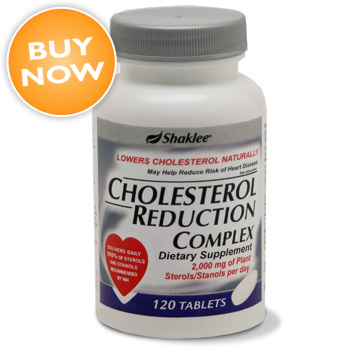
Say “GOODBYE” to Lipitor (and other statin drugs) Natural Cholesterol Reduction Complex (click image for full view)

Click for Full View

Shaklee Natural Cholesterol Reduction Complex has FDA approval to claim our product does reduce Cholesterol.

Natural Cholesterol Reduction Complex†

Shaklee Cholesterol Reduction Complex is a proprietary formulation with clinically proven ingredients that help prevent the absorption of cholesterol and lower LDL
(“bad”) cholesterol.

Made with a powerful blend of sterols and stanols, which are found naturally in plants, fruits, vegetables, and grains

Delivers 2,000 mg of plant sterols and stanols daily
Plant sterols and stanols have been clinically proven by more than 80 studies to lower LDL cholesterol

Delivers daily 100% of the National Institutes of Health (NIH) recommendation for sterols and stanols*

Lower your cholesterol naturally with Shaklee Cholesterol Reduction Complex!
Click here to learn more

†Products providing 800 mg of plant sterols and stanols daily, consumed with two different meals as part of a diet low in saturated fat and cholesterol, may reduce the risk of heart disease. Cholesterol Reduction Complex provides 1,000 mg of plant sterols and stanols per serving, and 2,000 mg daily when used as directed.

*NIH recommendation for lowering cholesterol: eat less saturated fat and cholesterol, exercise, lose weight, eat more soluble fiber, and consume 2,000 mg of plant sterols and stanols daily.

Cholesterol Reduction Complex†
With clinically proven ingredients to lower LDL ("bad") cholesterol
Size: 120 Tablets
Retail Price: $51.75
Member Price: $43.95

Have a question about Cholesterol? Click here and ask me!

My Personal Experience with Lipitor
Excerpt from: “I FIRED MY DOCTORS AND SAVED MY LIFE” by Sam and Bunny Sewell

Sinister Science
The day after our visit with Dr. Star, we had an appointment with Dr. George Babbitt (whose code-name alas, won’t make sense without a background in American Literature).

As it happened, this first appointment with a physician did absolutely nothing to ease my growing suspicion of modern cardiac medicine. He reiterated the message from Dr. Ghoul: my medical needs could not be met in Naples and I was being referred to a surgeon in Tampa for a heart transplant.

I asked Dr. Babbitt about the Lipitor dose he had prescribed me. By then, I had already found for myself the safety and efficacy FDA studies that originally approved Lipitor. These studies had used doses of 2.5 mg and 5 mg daily. Yet interestingly, the lowest available dose of Lipitor manufactured by the pharmaceutical company, Pfizer, was 10mg – double the highest dose used in the FDA studies for safety and effectiveness!

If that wasn’t enough to raise my eyebrows, Dr. Babbitt prescribed 80 mg daily doses of Lipitor – 16 to 32 times the doses used in the FDA studies. I told my doctor about my research on the FDA studies.

“You shouldn’t worry about those FDA reports – I have studies showing that 80 milligrams per day are safe, and more effective than those lower doses.”

I asked him who had done his studies.
“Pfizer.”

I didn’t tell him that I was already aware of the Pfizer sponsored studies.

I suspect that Dr. Babbitt never saw the actual Pfizer studies, but had simply taken the word of a “detail man,” a representative of a drug manufacturer who calls on doctors to promote the products from that company. I wondered if he would be so enthusiastic about high-dose Lipitor had he actually read the study.

In 2005, the New England Journal of Medicine published a report funded by Pfizer that described the efficacy of high-dose Lipitor in cardiovascular disease. The authors concluded that high-dose Lipitor (80 mg) was superior to a ‘standard dose’ (10 mg) in reducing negative cardiovascular events in coronary heart disease (CHD) patients. Ten thousand CHD patients participated in the five-year study. Half of them received a daily dose of 80 mg of Lipitor, while the other half received a control, ‘standard’ dose of 10 mg/day.

The Pfizer study observed a reduction in major cardiovascular events in the high-dose Lipitor group (heart attack and/or stroke) over the course of the experiment. In the 80 mg group, 8.7% (or 434 patients) suffered a major cardiovascular event, compared to 10.9% (or 548 patients) of patients in the standard 10 mg group. When you do the math, that’s a difference of 2.2% – or 104 fewer cardiovascular incidences in the high-dose Lipitor group – a statistically significant improvement over standard treatment. Furthermore, only 126 patients in the 80 mg/day Lipitor group died from cardiovascular problems during the study, as compared to 155 in the 10 mg/day group.

I was surprised to discover that treatments were tested and put into practice with such small efficacy ratings. But, 2.2% is better than nothing, right?

Not when you take into account that in this same study, 158 deaths due to non-cardiovascular events occurred in the 80 mg/day group (3.2%), versus only 127 (2.5%) in the lower dose condition. Cancer, particularly lung and gastrointestinal, was responsible for more than half of these deaths. Hemorrhagic stroke and other, non-traumatic causes contributed to the remainder of non-cardiovascular deaths in both treatment conditions. However, this difference of 31 more deaths from non-cardiac related causes in the high-dose group brings the total deaths to 282 in the 10 mg Lipitor group, and 284 in the 80 mg group – statistically, that means there was no difference at all. Your chances of survival were actually 1 in 5000 lower if you took a high dose rather than a standard dose of Lipitor.

Between the actual statistics revealing the serious side effects associated with Lipitor and other statin drugs, and the failure to improve overall survival rate by using higher doses of Lipitor, I suspected that my doctor, had he actually been up on the facts, could have made a wiser choice. However, the professional to whom I was entrusting my life didn’t seem to be as well informed on the subject as I was. Later I was to discover that this isn’t unusual; it doesn’t take much research to be better informed than some doctors.

However, it was easy to understand why the drug salesmen from Pfizer only talked about the (tiny) advantage in reducing cardiac events and failed to mention the fact that there was no overall advantage in reducing death.

So why were the patients in the high-dose Lipitor study dying more frequently from non-cardiovascular causes? At this point, the mechanisms underlying this effect are unclear – we just can’t tell. But as one expert in the field wrote, “we need further reassurance as to the safety of this approach before making this higher dose a standard practice in CHD pharmacological therapy.” Despite their prevalence, the statins are not the only available method that can be used to lower LDL-C levels. Hybrid therapies with other drugs, natural therapies, and nutrition can all be effectively used for this purpose. But my highly paid doctor didn’t know that, either.

Muscle Pain and WeaknessShortly after I left the hospital, I began experiencing significant pain in my arms and shoulders. I don’t want to sound melodramatic, but the pain was incessant, a relentless twenty-four hours a day, every long day. On a severity scale from 1 to 10 (10 being excruciating, 1 being a hangnail), my pain fluctuated between 6 and 8. I struggled to dress myself, to the point that I stopped wearing T-shirts because of the sheer pain it caused to pull them on over my head. I couldn’t sleep because I couldn’t get comfortable, and even when I did slip into unconsciousness, pain shook me awake again. The upper body exercises I needed to do in preparation for surgery were impossible.

We hired two massage therapists to try to help me cope with the pain. They each came to our home once a week. On Thursdays came Frau Athena, so named after the Greek goddess of wisdom, war, arts, industry, justice and skill. Frau Athena was a German woman, as beautiful, strong, highly skilled, intelligent, and kind as the goddess. She knew that pain was part of the process of healing through massage, and showed no qualms about inflicting pain on me. Once, I muttered a weak joke (through clenched teeth) as she kneaded my aching muscles, “I told you, I don’t know where the diamonds are.”

“Dustin Hoffman from Marathon Man,” she quickly responded, amused by the attempt.

Frau Athena always ended my sessions by simply being gentle and kind; more than once did I fall asleep during the soothing massage & foot rub during the last few minutes of her therapy sessions.

On Saturdays came my other massage therapist – code name Bruce Lee – the Buddhist who practices massage therapy as if it were a martial art. A long-time friend of the family, he has a kind heart, but his technique is more competent than kind – he all but beat me up for my own good, a sort of ‘tough love’ massage therapy. Bruce Lee knows more about physiology and human chemistry than most of the doctors I’d been working with. He’s worked several years with Dr. Nobel; together, the two of them probably make the best alternative medicine team in the world. What’s more, Bruce Lee is not just a massage therapist: he also owns a successful Pilates studio and acts as a health consultant to some of the most wealthy and successful people in the nation. I joked that he could always moonlight for the CIA because he could get terrorists to talk by administering therapy, and no one could call it torture because he is licensed to do it.

But in addition to my constant pain, I was rapidly growing weaker and my muscle mass was noticeably deteriorating. I was horrified to see my usually well-muscled upper arms begin to wrinkle and shrink. After only a month of drug treatment, Bunny and I compared photos taken of me in the hospital to my appearance at that current point.

The difference in muscle size and tone was painfully obvious. On the first anniversary of my heart attack, as I finish this manuscript, I am still experiencing pain in my arms and shoulders. After less than six weeks on the medications, I had already researched the effects of Lipitor, and realized that the pain and weakness was not a side effect of the heart attack – but a side effect of the drug being used to treat the heart.

When that realization sank in, I actually got frightened. See, some of the side effects from statin drugs have killed people, and those same side effects were characterized by muscle pain and weakness. I knew that just because I had the symptoms, it didn’t necessarily guarantee that my medicine was going to prove fatal. However, my irrational self began to think, “The heart attack didn’t kill me but now the doctors and drug companies are going to kill me in a slow and agonizing way. Better to have died quickly, if I have to die anyway. If I am going to die someday let’s just get it over with”

Excerpt from: “I FIRED MY DOCTORS AND SAVED MY LIFE”
by Sam and Bunny Sewell
*Doctors, drugs & surgery are not always the best answer!
*Includes scientifically validated Total Life Saving Regimen!
*NOW ~ You can buy our new book:

Healthy, Natural Alternatives to Drugs and Surgery
and have it sent directly to family & friends at:
http://www.lulu.com/content/1575438

$19.95 PRINT ~ only $12.50 as PDF download
For autographed copies, call 239/591-4565

View videos at: www.ifiredmydoctors.blogspot.com

Read our famous Chapter 16 on Stress Management at
http://stressmood.blogspot.com/

Monday, August 2, 2010

Monday Health Sciences Seminar Aug.2 7PM - FOOD MATTERS

Still room for a few more. If you have NOT RSVPed & would like to see this, please let us know!
Spread the word. Bring friends. Everybody needs to see this one!


We are delighted to be able to show the informative, solution-focused documentary

FOOD MATTERS
a mUST SEE if we are going to be able to create healthier lives for our selves and our posterity!

Monday, August 2, 7-8:30PM
RSVP 591-4565 Seating limited! 10202 Vanderbilt Dr (NE Corner at 102nd Ave) Naples, Fl 34108

FOOD MATTERS is a VERY IMPORTANT feature length documentary film informing you on the best choices you can make for you and your family's health. In a collection of interviews with leading Nutritionists, Naturopaths, Scientists, M.D.s and Medical Journalists you will discover...

…WATCH THE TRAILER http://www.foodmatters.tv/

"Let thy Food be thy Medicine and thy Medicine be thy Food" - Hippocrates. That is the message from the founding father of modern medicine echoed in the controversial new documentary film Food Matters from Producer-Directors James Colquhoun and Laurentine ten Bosch.With nutritionally-depleted foods, chemical additives and our tendency to rely upon pharmaceutical drugs to treat what's wrong with our malnourished bodies, it's no wonder that modern society is getting sicker. Food Matters sets about uncovering the trillion dollar worldwide 'sickness industry' and gives people some scientifically verifiable solutions for overcoming illness naturally.
"With access to better information people invariably make better choices for their health..."
In what promises to be the most contentious idea put forward, the filmmakers have interviewed several leading experts in nutrition and natural healing who claim that not only are we harming our bodies with improper nutrition, but that the right kind of foods, supplements and detoxification can be used to treat chronic illnesses as fatal as terminally diagnosed cancer.The focus of the film is in helping us rethink the belief systems fed to us by our modern medical and health care establishments. The interviewees point out that not every problem requires costly, major medical attention and reveal many alternative therapies that can be more effective, more economical, less harmful and less invasive than conventional medical treatments.The ‘Food Matters' duo have independently funded the film from start to finish in order to remain as unbiased as possible, delivering a clear, concise message to the world. FOOD MATTERS!! Monday, August 2nd, 7PM. RSVP: 239/591-4565

It is way past time to slay the beast.


Pt 1) http://www.youtube.com/watch?v=MSpkLk0vYmk
Pt 2) http://www.youtube.com/watch?v=-B9MeO3SRxU&NR=1